Atlasby Edith
DOSSIERTokyo · First-time · 3 days
first-time / soloWalkableBest: May · April · OctoberPass

Three days in Tokyo

The version where you don't get lost. Temples by morning, neon by night, trains in between.

Duration3 days
PaceModerate
Climate20.2°C avg high
Audiencefirst-time / solo

Three days in Tokyo. Not the 10-day slow-travel version where you learn to bow properly — the 72-hour sprint where you hit old Tokyo, modern Tokyo, and the food city underneath it all, and leave knowing which neighborhoods you want to come back for.

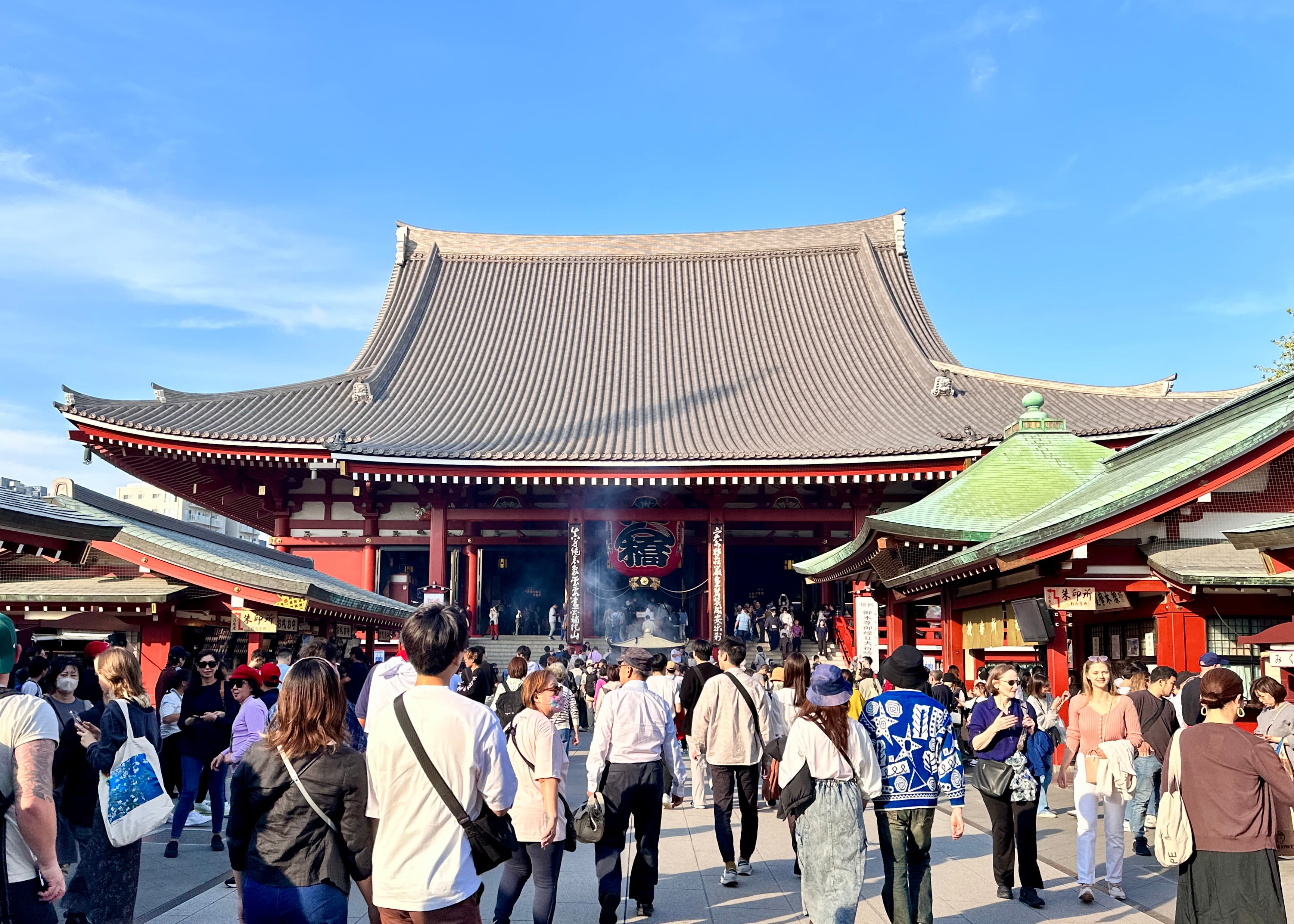
Day 1 is east — Asakusa's old temple, Ueno's museums, Akihabara's seven-story anime towers. Start at 7am at Sensō-ji when it's still incense and broom-sweeping monks, because by 10 it's a river of selfie sticks.

Day 2 is imperial then modern-west. Palace gardens at open. Meiji Jingū's forest by noon. A long afternoon walk down Omotesandō (every building is a name-architect flagship), ending at Shibuya Crossing at dusk when the neon kicks in.

Day 3 is choose-your-own: Tsukiji market breakfast, Ghibli Museum if you booked weeks ago, Skytree at sunset, Kabukichō nightcap. Don't try to do it all — pick three. Day 3 is the day the first-timer's instinct breaks down, so I'm giving you permission early.

Tokyo's size is a feature, not a bug. Every line on the metro map takes you somewhere worth going. Carry a Suica card, pack shoes that won't betray you at 25,000 steps, and accept that you will eat at a 7-Eleven at least twice — and that it will be genuinely good. This is the easiest big city on earth to travel solo. Nobody bothers you; everything is labelled; the trains are on time and the rice balls cost ¥150.

TL;DR

  • Day 1 — Old Tokyo: Sensō-ji at 7am, Ueno museums, Akihabara neon
  • Day 2 — Imperial + West: palace gardens, Meiji Jingū, Omotesandō, Shibuya Crossing
  • Day 3 — pick three: Tsukiji breakfast, Ghibli, Skytree sunset, Shinjuku Kabukichō
  • Best months: late March–April (sakura), or late October–November (foliage, half the crowds)
  • Buy a Suica/Pasmo on arrival — covers every train, bus, vending machine, and conbini till you leave
✦ ✦ ✦

The 3 days

each one a scrap in the journal
Sensō-ji Temple
Old Tokyo
Temple in the morning, museum in the afternoon, neon by night.

Asakusa · Ueno · Akihabara

  • ⚡ 5 stops · ~7 km · 15,000 steps
  • 🎫 Tokyo Metro 24h pass ¥800 covers it all
  • ⏰ Start 7:30 at Sensō-ji · done by 22:00
  • ⛩️ Icons: Sensō-ji · Nakamise · Tokyo National Museum · Akihabara
  • 💡 Nakamise stalls open 9am — come early for the temple alone
  • 🍱 Lunch at Ueno's Ameya-Yokochō market, not the tourist spots
Tokyo Imperial Palace
Imperial + Modern West
Palace gardens at open, shrine forest by noon, the Crossing at dusk.

Chiyoda · Shibuya · Harajuku

  • ⚡ 5 stops · ~6 km · 14,000 steps
  • 🏯 Imperial Palace East Gardens — free, open 9am
  • ⛩️ Meiji Jingū forest — louder than you'd expect (cicadas)
  • 🌳 Conbini picnic in Yoyogi: FamilyMart onigiri, cold oolong
  • 🏛️ Omotesandō = the architecture walk, not just shopping
  • 🚦 Shibuya Scramble Square SKY rooftop ¥2,500 — worth it
Tsukiji fish market
Market · Sky · Shinjuku
Breakfast at the market, Ghibli by lunch, the city from above, a nightcap in Kabukichō.

Tsukiji · Mitaka · Shinjuku

  • ⚡ 5 stops · ~9 km · 18,000 steps (if you do all)
  • 🐟 Tsukiji outer market 7–9am — eat everything
  • 🎬 Ghibli Museum — tickets release 10th prev month, book instantly
  • 🌇 Skytree sunset slot, not noon — glass floor for the gram
  • 🍢 Omoide Yokochō = "piss alley" = yakitori heaven
  • 🥃 Golden Gai: six alleys, 200+ bars, some have cover charges (ask first)

Day by day, in full

tap a tab to flip the page

Day 1 · Old Tokyo

Temple in the morning, museum in the afternoon, neon by night.

Asakusa is a morning place. The energy here is all wrong after 3pm — harried tour buses, closed tea shops. Do the temple early, eat brunch in a side alley, then get out to Ueno while the museums are still open. Don't try to reverse the order; you'll hate it.
8:30
Morning
Sensō-ji Temple

Sensō-ji Temple

Buddhist temple in Tokyo, Japan.

Mo-Su 06:00-17:00🎫 Free🌐 Official site
Arrive by 7:30. Sensō-ji at 10am is a river of selfie sticks. At 7 it's incense smoke and broom-sweeping monks, and Nakamise-dōri's stalls are just raising their shutters (they stay closed till 9, but that's a feature — you get the street to yourself).
tap for the story →

Sensō-ji Temple

Buddhist temple in Tokyo, Japan.

Sensō-ji , is an ancient Buddhist temple in Asakusa, Tokyo, Japan. It is Tokyo's oldest-established temple, and one of its most significant. It is dedicated to Kannon, the bodhisattva of compassion. Structures in the temple complex include the main hall, a five-story pagoda and large gates. It is the most widely visited religious site in the world with over 30 million visitors annually. The temple is the 13th stop on the Bandō Sanjūsankasho pilgrimage route.
Read more on Wikipedia →
← tap to flip back
Asakusa Shrine

Asakusa Shrine

Shinto shrine in Asakusa district, Tokyo, Japan.

Tucked right behind Sensō-ji's main hall. Shinto, not Buddhist — same complex, different gods. Two minutes of your time, zero queue.
tap for the story →

Asakusa Shrine

Shinto shrine in Asakusa district, Tokyo, Japan.

Asakusa Shrine is a Shinto shrine in the Asakusa district of Tokyo, Japan. Also known as Sanja-sama , it is one of the most famous Shinto shrines in the city.
Read more on Wikipedia →
← tap to flip back
11:00
Late morning
Ueno Imperial Grant Park

Ueno Imperial Grant Park

Park in Tokyo, Japan.

09:30-17:00🎫 Free♿ Accessible🌐 Official site
Walk or Ginza Line two stops. The park is Tokyo's museum quarter — nine museums inside it, plus a zoo, plus the cherry trees everyone Instagrams in April.
tap for the story →

Ueno Imperial Grant Park

Park in Tokyo, Japan.

Ueno Park is a spacious public park in the Ueno district of Taitō, Tokyo, Japan. The park was established in 1873 on lands formerly belonging to the temple of Kan'ei-ji. Amongst the country's first public parks, it was founded following the Western example as part of the borrowing and assimilation of international practices that characterizes the early Meiji period. The home of a number of major museums, Ueno Park is also celebrated in spring for its cherry blossoms and hanami. In recent times the park and its attractions have drawn over ten million visitors a year, making it Japan's most popular city park.
Read more on Wikipedia →
← tap to flip back
15:30
Afternoon
Tokyo National Museum

Tokyo National Museum

Art museum in Tokyo, Japan.

Mo-Su 09:30-17:00🎫 Paid entry🌐 Official site
Japan's oldest and largest. The Honkan (main gallery) alone is worth two hours — samurai armor, ukiyo-e prints, a 12th-century scroll of the Tale of Genji. Skip the other five buildings unless you're obsessed.
tap for the story →

Tokyo National Museum

Art museum in Tokyo, Japan.

The Tokyo National Museum or TNM is an art museum in Ueno Park in the Taitō ward of Tokyo, Japan. It is one of the four museums operated by the National Institutes for Cultural Heritage, is considered the oldest national museum and the largest art museum in Japan. The museum collects, preserves, and displays a comprehensive collection of artwork and cultural objects from Asia, with a focus on ancient and medieval Japanese art and Asian art along the Silk Road. There is also a large collection of Greco-Buddhist art. As of April 2023, the museum held approximately 120,000 Cultural Properties, including 89 National Treasures, 319 Horyuji Treasures, and 649 Important Cultural Properties. As of the same date, the Japanese government had designated 902 works of art and crafts as National Treasures and 10,820 works of art and crafts as Important Cultural Properties, so the museum holds about 10% of the works of art and crafts designated as National Treasures and 6% of those designated as Important Cultural Properties. The museum also holds 2,651 cultural properties deposited by individuals and organisations, of which 54 are National Treasures and 262 are Important Cultural Properties. Of these, 3,000 cultural properties are on display at one time, with each changing for between four and eight weeks. The museum also conducts research and organizes educational events related to its collection.
Read more on Wikipedia →
← tap to flip back
19:00
Evening
Akihabara

Akihabara

Shopping area in Chiyoda, Tokyo, Japan.

⭐ Iconic
Ueno to Akihabara is one stop on the JR Yamanote. Seven-story electronics towers, anime megastores, and maid cafés that are exactly as weird as you'd imagine. Go for the neon, stay for Gonpachi or a curry-rice dinner at Go-Go Curry.
tap for the story →

Akihabara

Shopping area in Chiyoda, Tokyo, Japan.

Akihabara is a neighborhood in the Chiyoda ward of Tokyo, Japan, generally considered to be the area surrounding Akihabara Station. This area is part of the Sotokanda (外神田) and Kanda-Sakumachō districts of Chiyoda. There is an administrative district called Akihabara, located north of Akihabara Electric Town surrounding Akihabara Neribei Park.
Read more on Wikipedia →
← tap to flip back

Eat well

four pastas, one pizza, no cream

Tokyo is a food city that doesn't care you're a tourist. The three-Michelin-star counter and the ¥900 standing-sushi bar in a Shimbashi basement operate on the same rules — show up, be quiet, eat what's in front of you. You can eat embarrassingly well for ¥2,000 a meal if you know where to stand.

showing 10 dishes, 12 places

Must-try

Sushi· sushi · 寿司

At a proper sushi counter the chef picks the order and the sauce is already on it (don't dip nigiri in soy — rude, and messes with the balance). Standing sushi bars near stations are the sweet spot: same fish, no theatre, 10 pieces for ¥1,500.

Best at Uogashi Nihon-ichi (standing, Shimbashi) or Sushi Dai (Toyosu, if you're patient).

Ramen· ramen · ラーメン

Tokyo is tonkotsu- and shoyu-heavy, not Hokkaido miso. Slurp (it's expected), no phone, eat fast — the noodles go limp in four minutes. Solo counters are the norm; you order at a vending machine out front, hand the chef the ticket.

Best at Afuri (yuzu shio · multiple locations) · Ichiran (the private-booth tonkotsu one) · Nagi (niboshi).

Tempura· tempura · 天ぷら

Not the greasy thing at your hometown sushi restaurant. Proper tempura is a light ice-water batter on seasonal vegetables and shrimp, served piece by piece straight from the fryer. Counter seating, watch the chef work.

Best at Tempura Kondo (Ginza, Michelin 2⭐) or Tsunahachi (Shinjuku, the accessible classic).

Yakitori· yakitori · 焼き鳥

Skewered grilled chicken, every part of the bird. Order omakase ('you decide'), drink cold beer or highball, enjoy the smoke. Omoide Yokochō in Shinjuku is the famous alleyway version; Piss Alley's actual name.

Best at Omoide Yokochō (any stall) · Birdland (Ginza, upscale).

Tonkatsu· tonkatsu · とんかつ

Deep-fried breaded pork cutlet on rice with shredded cabbage and a tangy brown sauce you mix yourself (sesame seeds optional). The platonic ideal of salaryman lunch.

Best at Maisen (Omotesandō flagship) · Tonki (Meguro, 1939).

Soba· soba · 蕎麦

Buckwheat noodles, served hot in broth or cold with dipping sauce (zaru soba). A station-counter soba stand will feed you for ¥400 in three minutes flat — one of Tokyo's great democratic pleasures.

Best at Kanda Matsuya (Kanda, since 1884) · any JR platform stand.

Conbini tasting· konbini · コンビニ

7-Eleven, FamilyMart, Lawson — the 'convenience stores' here are a food category unto themselves. Onigiri (rice triangles, ¥150), egg sando (¥260 and genuinely iconic), tonkatsu sando, oden in winter, Lawson's 'Karaage-kun.' Pick your favorite chain by dinner two.

Best at Every corner · FamilyMart's egg sando is the meme winner.

Wagyu· wagyu · 和牛

If you're going to splurge one meal on meat, this is it. Find a yakiniku (grill-your-own) or teppanyaki place. Order A5 grade, one or two cuts, eat slow. It's not steak — it's closer to butter that happens to be meat.

Best at Han no Daidokoro Bettei (Shibuya) · Ukai-tei (Omotesandō).

Matcha + wagashi· matcha to wagashi · 抹茶と和菓子

Proper ceremony-grade matcha, whisked thick, served with a seasonal sweet (wagashi — sculpted bean-paste confections). Do it once at a tea house; it's a 20-minute ritual and resets your nervous system.

Best at Nakamura Tea Life Store (Asakusa) · any tea house in Ueno.

Taiyaki + melon pan· taiyaki / melon pan · たい焼き / メロンパン

Street sweets. Taiyaki is a fish-shaped waffle filled with red bean or custard; melon pan is a sweet bun with a cookie-crust top (no actual melon). Eat walking, preferably down Nakamise-dōri.

Best at Kameido-Ume-Yashiki (taiyaki) · Kagetsudō (melon pan, Asakusa).

Hot spots

Ichiran Ramen

$
ramen chain · Shibuya · Shinjuku · everywhere

The private-booth tonkotsu one. You fill out a paper order form, slide it through a slat, a bowl appears. Solo-diner coded. Yes, it's a chain; yes, it's still good.

Classic tonkotsu, extra-firm noodles, kaedama (noodle refill) for ¥190

Afuri

$
ramen · Ebisu · Harajuku · Roppongi

Citrusy yuzu shio ramen that resets what you think ramen tastes like. Clean, aromatic, restorative. Lines move fast.

Yuzu shio ramen, chashu add-on

Uogashi Nihon-ichi

$
standing sushi · Shimbashi · Shibuya

Counter-sushi for the cost of a movie ticket. You stand, you eat, you leave. The fish is from Toyosu that morning.

10-piece nigiri set ¥1,500

Omoide Yokochō

$$
yakitori alley · Shinjuku (west exit)

Narrow smoky lane of 60+ yakitori stalls under JR tracks. 6–9 seats each, cold beer, charcoal grill in your face. Kabukichō's older, better-behaved cousin.

Chicken thigh skewers, leek skewers, kawa (chicken skin)

Golden Gai

$$
tiny bars · Kabukichō, Shinjuku

Six alleys, 200 bars, most seat six. Some welcome tourists (look for English signs), some don't (look for 'members only' or a cover charge sign). Pick one with the door open.

Whisky highball, house cocktails, bar-snack onigiri

Tsukiji Outer Market

$
breakfast stalls · Tsukiji

Inner market moved to Toyosu, but the outer market — 400 shops of tamago, uni, knives, dashi — is still here. Breakfast crawl, not a sit-down.

Tamagoyaki skewer (¥100), uni-don (¥2,500), strawberry mochi

Maisen

$$
tonkatsu · Omotesandō flagship

The tonkatsu that ruins all other tonkatsu for you. 60-year-old Kurobuta pork shop inside a converted public bathhouse.

Kurobuta rosu katsu set

Nakamura Tea Life Store

$$
tea house · Asakusa

Tiny, quiet, wagashi-and-matcha on a proper tatami. 20-minute reset button between temple and museum.

Matcha + seasonal wagashi set

Han no Daidokoro Bettei

$$$
yakiniku · Shibuya

A5 wagyu grill-your-own without the Ginza markup. Multi-floor, long lines at 7pm, but the queue moves and the staff help first-timers order.

A5 ribeye, tongue, harami skirt

Go-Go Curry

$
Japanese curry · Akihabara · Shinjuku

Thick Kanazawa-style curry, topped with breaded pork cutlet, served on a metal plate with cabbage. ¥900, 12 minutes, no regrets.

Pork cutlet curry, major size

FamilyMart / 7-Eleven / Lawson

$
conbini · every corner

Not a joke. FamilyMart's egg sando, 7-Eleven's tuna onigiri, Lawson's Karaage-kun. Breakfast ¥350, cold coffee included. The equalizer.

Tamago sando (FM), sea-chicken mayo onigiri (7-11), Karaage-kun (Lawson)

Kagetsudō

$
melon pan · Asakusa (Nakamise side)

The melon pan Tokyo argues about. Crackle-crust top, hot soft center, ¥250. Walking breakfast while the temple stalls open up.

Jumbo melon pan, melon pan ice cream
Walk past these

  • Any restaurant in Ginza, Asakusa, or near the Imperial Palace with a photo menu in five languages. Same fish, triple the price, zero locals.
  • 'Kobe beef' restaurants in Akihabara and Shibuya — there's no actual Kobe-licensed beef in Tokyo outside a handful of Ginza places. What you're eating is regular wagyu at a 3x markup.
  • Chain izakaya with picture menus (Watami, Hana no Mai, Uotami). They serve food, technically. They do not serve dinner.
  • Anything described as an 'authentic Japanese experience' in English on a banner outside. The authentic thing has a tiny ceramic sign and no English.
  • Sushi conveyor belts inside JR stations. The ones in shopping malls (Genki, Sushiro) are fine; station-platform ones are last-resort.

From travelers

what people said, unvarnished

Book Ghibli the morning tickets release, 10th of the prior month, 10am JST. Set a phone alarm. I watched three of my friends think they'd do it "later that week" and not a single one got in.

r/JapanTravelHeads-up

Solo eating in Tokyo is the easiest solo eating on earth. Ramen counters, standing sushi, ichiran's private booths — the whole country is built for the single diner. You will be less self-conscious here than eating alone at your neighborhood diner back home.

r/solotravelPraise

If someone tells you to exit Shibuya Station from Hachikō Exit, they've been. If they tell you to exit from Shibuya Scramble Square, they looked at a map. Hachikō is the one.

r/tokyoTip

The JR Pass math only works if you're taking a Shinkansen within the week. For just Tokyo, a Suica card costs ¥500 and you top it up ¥2,000 at a time. Don't buy the pass.

travel.stackexchange.comTip

Akihabara is way less weird than YouTube makes it look, and it's also more wonderful. It's a working electronics district full of actual Japanese people shopping for capacitors. The maid cafés are real, optional, and you can just walk past them without being abducted.

r/JapanTravelTip

Conbini onigiri is the travel food of my life. ¥150, in your pocket, eaten on a park bench in Yoyogi. I gained four pounds in a week and I regret nothing.

r/travelPraise

Before you go

things the guidebooks left out
01

Ghibli Museum: book the 10th

Tickets for any given month release on the 10th of the month before, 10am JST, on the official site. They sell out in hours. If you're not online at exactly that moment with a credit card ready, you're not going. No walk-up line exists.

02

Cash still rules small shops

Tokyo is not as card-friendly as it looks. Tiny izakaya, old-school ramen counters, and temple-market stalls want yen. Carry ¥10,000 as backup — 7-Eleven ATMs take foreign cards and are on every corner.

03

JR and Metro are different operators

JR Yamanote is the green loop (Shibuya, Shinjuku, Tokyo Station, Ueno). Tokyo Metro is a separate company, separate colored lines. One Suica/Pasmo works on both — but a 'JR Pass' doesn't cover Metro, and a 'Tokyo Metro 24h pass' doesn't cover JR. For 3 days, Suica alone is simpler than any pass.

04

Train etiquette is real

No phone calls on trains. Texting fine, voice calls not. No eating full meals on commuter lines (Shinkansen is the exception). Form a line on the platform at the marked spot, step aside to let passengers off first. Half-hearted violations earn a hard stare; persistent violations earn a station attendant.

05

25,000 steps is not a metaphor

Tokyo is walked. Subway stations are long, transfers are longer (Shinjuku has a 12-minute cross-station walk). Skip the heels (or carry them — we know, the gram shots don't shoot themselves). Actual running shoes, broken-in, day one.

06

Tokyo is absurdly safe

You can fall asleep on a late-night train with your phone in your lap and it will be in your lap when you wake up. Violent crime is extraordinarily rare, and pickpocketing is a genuine oddity, not the default. This changes everything about how you move.

The walk

streets, stops, and the shape of the day
Unfolding the map…
Day 1Day 2Day 3
reads
share floats bottom-right
Reply to EdithTip, correction, or just a hello — she reads every one.
One version of many

Tell me your pace, dietary, days, budget — and I'll rebuild Tokyo to match.

Customize this trip